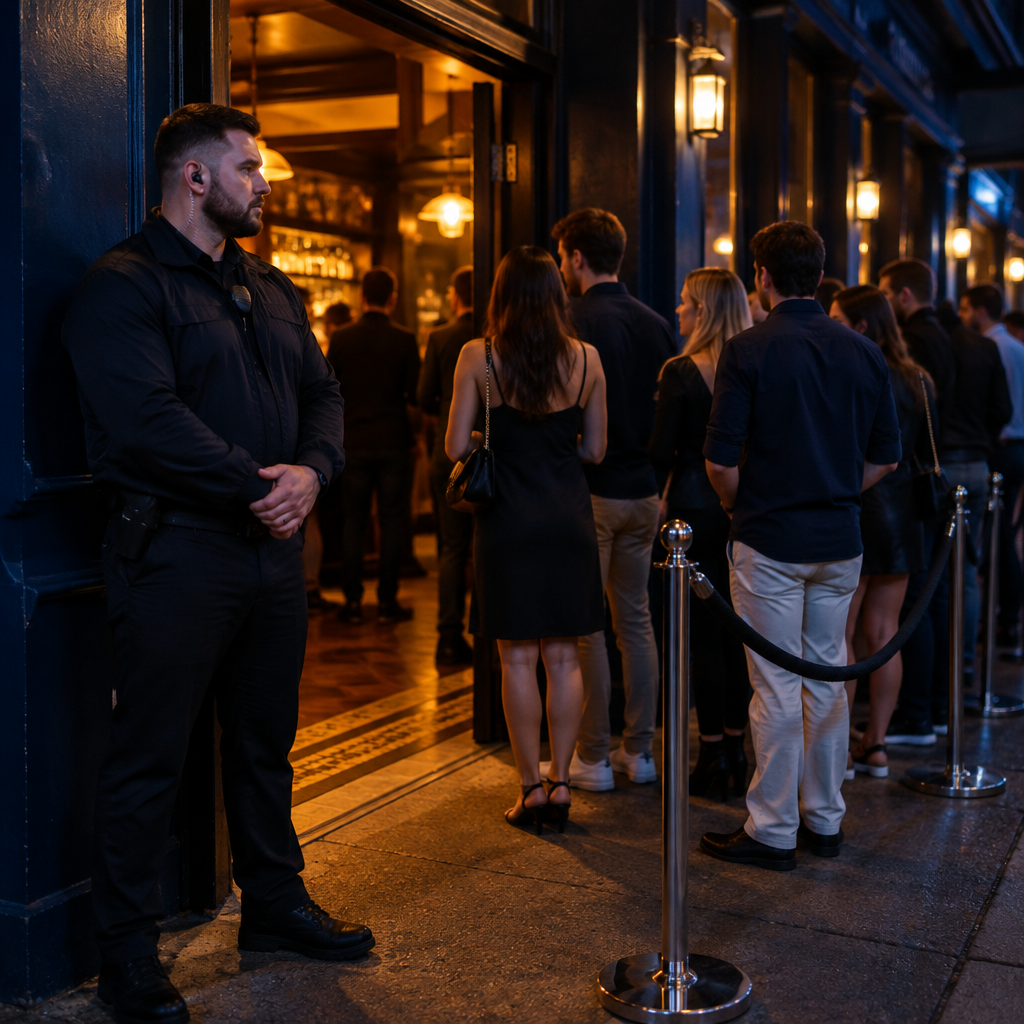
Campbelltown has one of the densest concentrations of licensed venues in south-west Sydney. Along Queen Street and through the CBD entertainment precinct, pubs, clubs, bars and function venues operate within a few hundred metres of each other, and on a Friday or Saturday night the foot traffic between them is heavy. For venue operators in the Macarthur region, that proximity brings revenue and risk in equal measure.
Licensed venue security is not generic guarding. The job sits at the intersection of alcohol service, patron safety, licensing compliance and crowd management, and getting it wrong is expensive in ways that go well beyond the door.
Why Licensed Venues Carry Different Risk
Three things separate a pub or club from any other commercial site.
- Alcohol is served under a licence. The venue's liquor licence carries conditions, and the way patrons are managed at the door and inside becomes part of the evidence trail if those conditions are tested.
- The venue is full of people who all know each other by the end of the night. Conflicts between groups escalate faster in a crowded room where everyone has been drinking, and the intervention window is short.
- The riskiest hours are the busiest hours. Closing time concentrates every risk: fatigue, aggression, intoxicated driving, queuing, and people who cannot get home safely.
What a Proper Door Actually Does
A trained crowd controller is not a bouncer standing at a rope. A professional door team is the first layer of a venue's safety system, and it does several things at once.
- Entry screening at the threshold. Intoxication, banned patrons, identification problems and prohibited items are all best handled before they are inside, when the person has not yet invested in an argument.
- Capacity and queue management. Keeping the entrance safe means managing the footpath, taxis and rideshare pick-ups, and the group dynamics in a queue that has been waiting too long.
- Continuous floor presence. The serious incidents usually start as a small disagreement at a table or in a smoking area. Officers who patrol the floor read those moments early and intervene before they become a headline.
- Documented records. Refused entries, ejections and incidents written up the same night, with times, descriptions and actions taken. This record is what protects the venue and its licence later.
The Incidents That Actually Cause Trouble
Across Macarthur venues, the pattern of incidents is fairly consistent.
- Refused entry escalating into aggression at the door, particularly when a group arrives and one member is declined
- Alcohol-fuelled disputes between patrons, often over an unrelated earlier conflict
- Patrons who become unwell, unresponsive or unable to get home safely
- Unwanted attention and harassment, often reported late or not at all
- After-close activity in the car park and surrounding streets as patrons disperse
None of these are solved by being bigger. They are solved by being trained, calm, sober and documented.
Event Nights and Functions Add a Second Layer
A venue that hosts concerts, functions, fight nights, fundraisers or large birthday events is running two security problems at once: the regular trading environment and the event. Event crowds behave differently from regular patrons, arrive in bursts, and often include people who are not familiar with the venue's layout or rules.
Event nights generally need more than door staff: a separate entry point, a dedicated supervisor, clear separation between event and venue traffic, and a briefing that covers expected numbers and the specific risks of that function. Our event security teams are briefed per event rather than deployed from a template.
Licensing and Insurance Are Not Optional
Any person providing security services in NSW, including crowd control at a licensed venue, must work for a business holding a Master Security Licence under the Security Industry Act 1997, and every officer must hold an operative licence for the class of work they perform.
Venues should verify this before appointing anyone, because the licence extends to the venue's own risk if something goes wrong. Ask for the Master licence number, check it on the SLED public register, confirm the class covers crowd control, and ask for a certificate of currency for public liability. A provider that cannot produce these quickly is a liability, not a bargain.
Matching Cover to Your Trading Pattern
Every venue's requirement is different, and copying a neighbouring venue's arrangement rarely works. A Campbelltown pub with a busy street frontage and a large outdoor area has different pressure points to a licensed club with poker machines, a bistro and a function room upstairs.
The right approach is to look at where incidents actually occur in your venue, what times they cluster around, and where your own staff are stretched. Often, two well-briefed officers plus a supervisor on a busy night outperform a larger static team, because they are positioned where the risk is. Traffic in Narellan, Ingleburn, Minto and Leumeah varies by the hour, and so does your door pressure.
Frequently Asked Questions
How many crowd controllers does a licensed venue need?
There is no single number. It depends on capacity, layout, the number of bars and entries, whether there is an outdoor area, and your trading pattern. A venue that holds 200 people in one room needs a different arrangement to one that spreads 200 people across three levels and a beer garden. Start from where incidents actually happen and how quickly staff can reach them, then size the team around that.
Is crowd control a separate licence to general guarding?
Yes. In NSW, crowd control is a specific class of security work. The provider must hold a Master Security Licence covering that class, and each officer must hold the correct operative licence for crowd control. General guarding experience is not a substitute, and a provider that treats the two as interchangeable is telling you something about their standards.
What should a venue ask before appointing a security provider?
Ask for the Master licence number and check it on the SLED public register. Confirm the licence class covers crowd control, request a certificate of currency for public liability insurance, and ask how incidents and refusals are recorded. Finally, ask who supervises the team on a Saturday night, and whether that supervisor has worked in licensed venues before.
Start with an assessment rather than a quote. No two venues carry the same risk, and a provider prepared to walk your floor, talk to your staff and read your incident history is the one worth working with. When you are ready to discuss commercial security arrangements for your venue, contact Davlin Security to discuss licensed venue security in Campbelltown.